Boardroom Balance: Advancing Gender Diversity for Resilient Leadership in MENA
Balanced boards build stronger futures. Embedding gender diversity into governance is the key to resilient leadership in MENA — and progress depends on moving swiftly from policy to practice.

Balanced boards build stronger futures. Embedding gender diversity into governance is the key to resilient leadership in MENA — and progress depends on moving swiftly from policy to practice.
Introduction: A Turning Point for MENA Boardrooms
The global debate on boardroom gender diversity has moved beyond advocacy into an era of accountability. Yet, despite years of momentum, the numbers remain sobering. As of Q1 2025, women hold just 26% of board seats worldwide, according to the Financial Times. In the Middle East and North Africa (MENA), representation is lower still, averaging under 30% across listed companies, with several markets hovering in single digits.
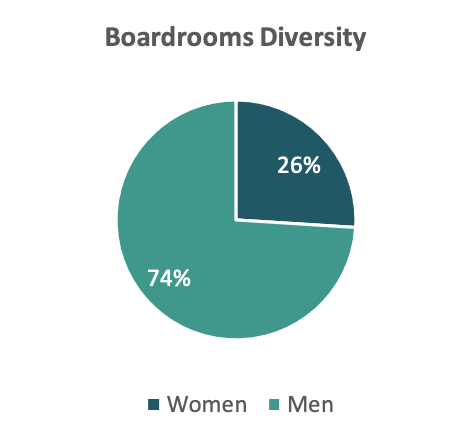
This imbalance is not merely a matter of optics — it has direct implications for resilience, competitiveness, and sustainable growth. Research from INSEAD's Corporate Governance Centre shows that organisations with diverse boards consistently outperform peers in navigating crises, managing risk, and delivering stakeholder trust. Similarly, Harvard Business Review emphasises that gender-diverse boards are better equipped to anticipate disruption, align with evolving ESG expectations, and capture innovation-driven growth opportunities.
For MENA boards, the choice is stark: embed gender diversity into daily governance practices now, or risk falling behind in a region and world where resilience is non-negotiable.
 The Global Context
Fragile Gains and New Risks
Globally, the representation of women in boardrooms has grown in the past decade, spurred by quotas, investor pressure, and evolving governance standards. Yet progress remains fragile. The FT reports that while quotas in France (45% women directors) and Norway (41%) achieved impressive results, such measures risk creating "box-ticking compliance" rather than embedding cultural change.
The COVID-19 crisis exposed the vulnerability of these gains. Many boards downsized during the pandemic, and female directors were disproportionately among the first to be cut, as highlighted by HBR. In MENA, where diversity efforts are newer, the impact was even more pronounced: several boards deprioritised inclusion during crisis management, underscoring that diversity must be hardwired into resilience planning, not treated as an afterthought.
"Diversity is not a moral add-on; it is a structural necessity for future-ready boards." — INSEAD scholars
The Regional SnapshotWhere MENA Stands Today
✓ Successes Worth Celebrating
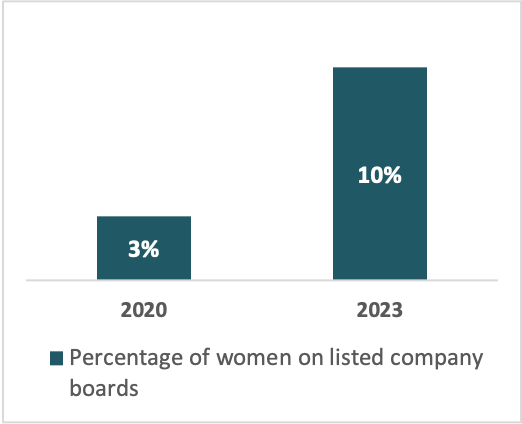
- Regulatory action is accelerating change. The UAE mandated women's representation on listed boards in 2021, raising participation from 3% in 2020 to nearly 10% in 2023 (FT). Saudi Arabia's Vision 2030 reforms have created structured pathways for women in senior leadership.
- Coalitions are gaining traction. Regional networks such as the 30% Club MENA, 50/50 Women on Boards, and Egypt's Women on Boards Observatory are building momentum through advocacy, mentoring, and visibility.
- Corporate champions are emerging. Firms like Emirates NBD and regional sovereign wealth funds are investing in female leadership development, signaling recognition of diversity as a competitiveness driver.
⚠ Persistent Gaps
- Intersectionality is absent. Women from underrepresented communities — by race, socioeconomic background, or nationality — rarely reach board level.
- Leadership pipelines are weak. Too few companies in MENA actively invest in preparing women for board readiness roles.
- Transparency is limited. While ADX and other exchanges encourage reporting, few boards disclose diversity metrics in annual reports or ESG disclosures, limiting accountability.
- The result? Progress plateaus around 30% — but true balance, and its benefits, remain out of reach.
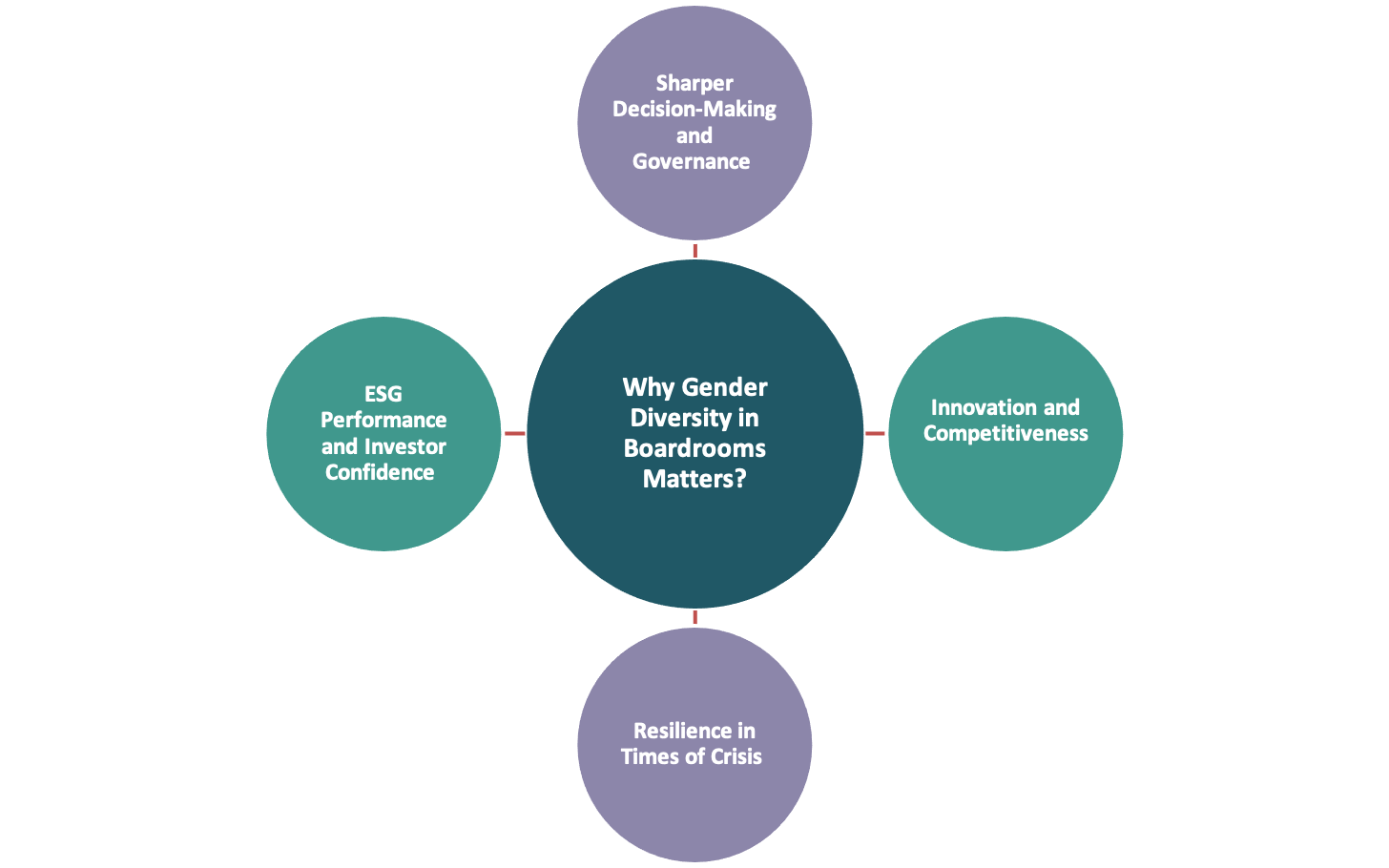
Why It MattersWhy Gender Diversity in Boardrooms Matters
Sharper Decision-Making and Governance
Homogeneous boards suffer from groupthink. By contrast, diverse boards integrate multiple perspectives, leading to better problem-solving and governance outcomes. Research from INSEAD confirms that gender-diverse boards are more likely to anticipate risks, challenge assumptions, and adapt effectively — capabilities essential in MENA's rapidly transforming economies.
Innovation and Competitiveness
HBR notes that diverse leadership teams are up to 25% more likely to financially outperform peers. This performance edge is rooted in innovation. Companies with gender-diverse boards are more likely to launch new products, pursue new markets, and embrace digital transformation — an imperative for MENA economies aiming to diversify beyond hydrocarbons.
Resilience in Times of Crisis
The pandemic revealed how fragile organisations without inclusive governance structures could be. Firms that integrated diversity into crisis planning saw higher employee retention, faster adaptation, and stronger stakeholder engagement. For MENA, a region navigating geopolitical volatility, fluctuating energy markets, and climate risks, embedding diversity into resilience planning is not optional — it is mission-critical.
ESG Performance and Investor Confidence
Gender diversity also strengthens environmental, social, and governance (ESG) credibility. Catalyst research links higher female board representation with stronger ESG performance, from environmental stewardship to labour practices. As FT highlights, global investors now tie board diversity directly to investment decisions. For MENA firms seeking foreign capital, diversity is a market access issue as much as a governance one.
Why the Urgency?The window of opportunity is now. Three forces are converging to make inaction costly:
- Global Benchmarking: Europe and parts of Asia are surpassing 40% female board participation. If MENA stalls at ~30%, reputational risk grows.
- Capital Market Dynamics: Investors and exchanges increasingly mandate diversity disclosure. Boards that fail to adapt may face limited access to capital.
- Strategic Resilience: From climate disruption to digitalisation, the challenges facing MENA demand broad, diverse perspectives in governance. Delay weakens competitiveness.
"Diversity is not a moral add-on; it is a structural necessity for future-ready boards." — INSEAD scholars
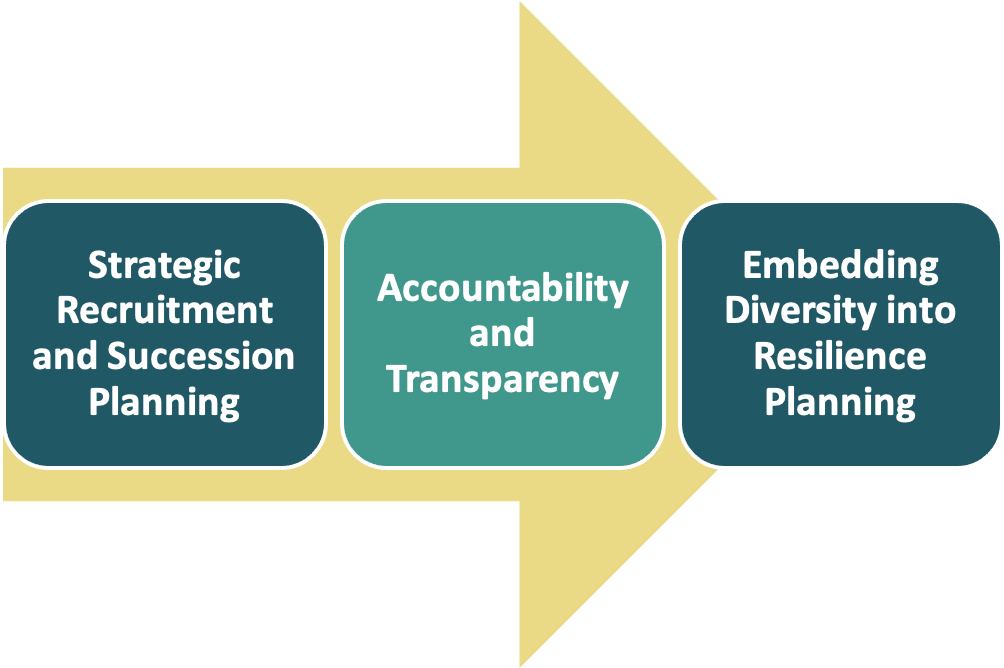
Practical Next StepsPractical Next Steps for MENA Boards
Strategic Recruitment and Succession Planning
Adopt bias-resistant recruitment, mandate diverse candidate pools, and build structured pipelines of female leaders. Partner with networks like the Women on Boards Observatory to identify talent.
Reduces tokenism, ensures sustainable representation, and prepares future board-ready leaders.
12–24 months to see improved board composition.
Accountability and Transparency
Establish measurable targets, disclose diversity metrics in annual reports, and create DEI subcommittees at board level.
Builds investor trust, strengthens ESG ratings, and embeds accountability into governance.
Immediate, aligned with annual reporting cycles.
Embedding Diversity into Resilience Planning
Incorporate gender perspectives into risk management, crisis response, and leadership development. Ensure flexible work policies and leadership pathways are aligned with women's advancement.
Enhances agility, improves retention, and fosters innovation in times of disruption.
12–18 months, visible in crisis response and talent outcomes.
Expected Business ImpactBoards that move from policy to practice can expect:
Financial Outperformance: Diverse boards deliver up to 25% stronger financial results (HBR).
Investor Confidence: Greater access to global capital as diversity becomes an investment criterion (FT).
Resilience and Agility: Stronger adaptation to crises and volatility.
Innovation Growth: Enhanced creativity and new market opportunities, supporting MENA's economic diversification agenda.
Closing ThoughtsFrom Promise to Practice
Boardroom gender diversity in MENA is at a crossroads. Regulatory quotas and policy shifts have created momentum, but quotas alone cannot guarantee durable change. True progress will only come when inclusion is lived daily — through recruitment, accountability, and resilience strategy.
As HBR emphasises, "boards that fail to reflect society will fail to serve it." For MENA, this is not only a governance challenge — it is a strategic necessity for competitiveness, resilience, and legitimacy in the global economy.
Balanced boards build stronger futures. The call for MENA leaders is clear: move decisively from policy to practice, and act now to ensure gender diversity becomes the cornerstone of resilient leadership.
Related InsightsReady to strengthen your board's governance?
Let's discuss how Bridge X Advisory can support your leadership.
Bridge What's Next